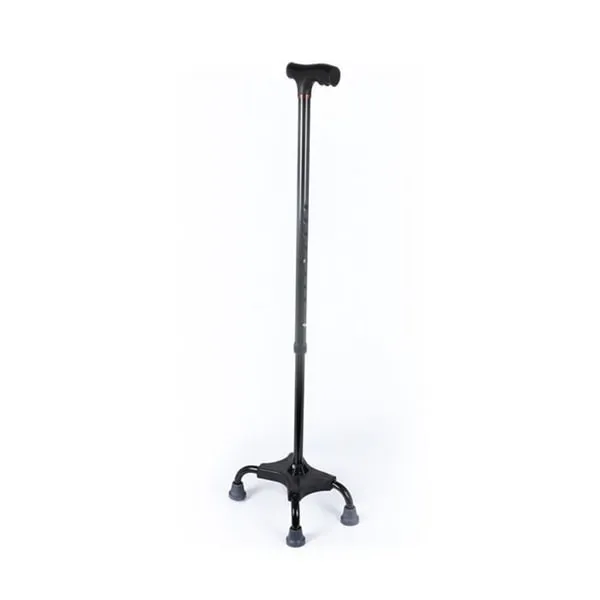
 LM-MOB-007
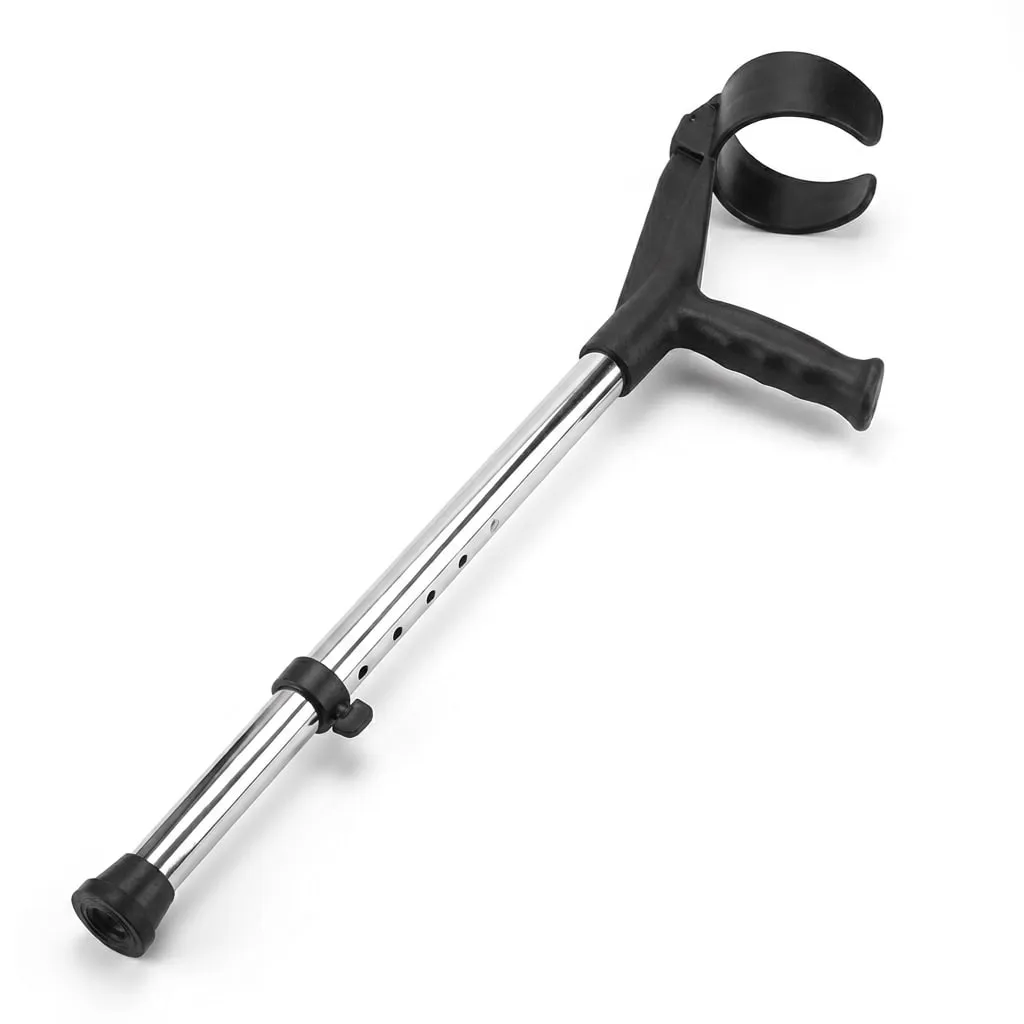
An elbow (forearm) crutch, for people who need lasting support while walking, in rehabilitation, long-term use and at home.
At a glance
Photos are for illustration.
An elbow (forearm) crutch, for people who need lasting support while walking, in rehabilitation, long-term use and at home. A black open forearm cuff and an angled, ridged handle are moulded as one piece on top of a polished telescopic metal shaft, so weight is shared between the hand and the forearm. The lower shaft adjusts in height with a row of holes and a locking clip, and a black rubber tip gives a firm grip on the floor.
| Type | Elbow (forearm) crutch |
|---|---|
| Shaft | Polished metal tube (aluminium-look), telescopic |
| Forearm cuff | Black, open C-shaped cuff, moulded together with the handle |
| Handle | Black moulded handle with a ridged grip, set at an angle to the shaft |
| Height adjustment | Adjustable-height lower shaft, with a row of holes and a locking clip |
| Tip | Black rubber ferrule at the foot |
| Finish | Polished metal shaft with black cuff, handle and tip |
| Available on request | Height range, Cuff and handle adjustment, Maximum user weight and 2 more |
Confirmed specifications only; pending items are marked.
Forearm crutches suit longer-term use because the cuff and grip share the load, leaving the hands free for a moment when needed. They also look less clinical, which some users prefer. Adjust both the grip and cuff height, and ask a physiotherapist to check the walking pattern.
Adjust the height with the cuff just below the elbow and test it standing. Check the tip and the locking pin each week.
LM-MOB-007 LM-MOB-008
 LM-MOB-001